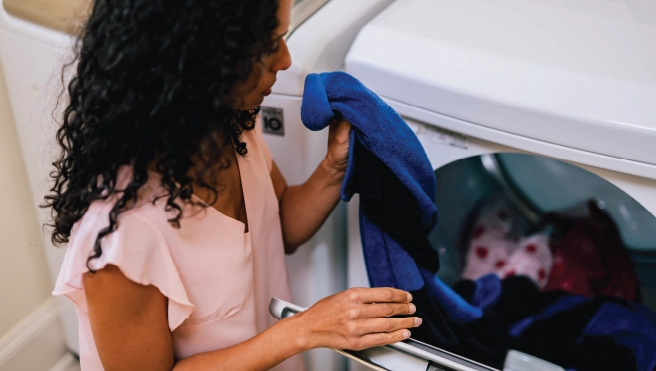
Damp loads and recurring musty odors often point to moisture remaining inside the dryer system because the vent cannot release air freely. These problems are often more noticeable with heavy fabrics, such as towels and bedding, because they hold more moisture.
A second cycle may finish drying a heavy load, but it only compensates for poor airflow and uses more time and energy. If lint or debris is causing the slowdown, clearing the vent system can remove the buildup. Meanwhile, crushed ductwork, disconnected joints, or excessive bends may need repair or rerouting.
A musty or mold-like smell does not confirm mold growth inside the vent. When abandoned nesting material or other organic contamination has affected the line, cleaning must remove the debris first. After the debris has been removed, sanitizing the vent system may help address lingering microorganisms that contribute to persistent odors.
How We Identify the Cause of Damp Clothes and Musty Odors
Our process begins by identifying airflow restrictions and the conditions that allow moisture to remain trapped in the system. Based on our findings, we'll recommend the most appropriate solution.
- Vent System Inspection: We check airflow, vent routing, connections, visible buildup, and conditions that may retain moisture.
- Full Vent Line Cleaning: We remove lint and debris that restrict airflow or hold dampness inside the exhaust path.
- Exterior Vent Check: We inspect the outside termination for stuck flaps, lint, snow, pests, or other obstructions.
- Route and Condition Assessment: We identify crushed ducting, disconnected joints, excessive bends, and damaged vent materials.
- Airflow Verification: We verify that the system is exhausting properly, explain our findings, and recommend any cleaning, repair, rerouting, or sanitizing services based on the condition of the vent system.