A dryer door can still feel awkward when the appliance sits too close to the washer, wall, or walkway. In compact basement laundry rooms and narrow utility spaces, changing the swing may improve access, but it cannot correct poor appliance placement or a strained vent connection.
Dryer Vent Wizard of West Michigan checks how the dryer fits the room before changing the door direction. We review the model, available clearance, door path, and vent connection to determine whether reversal will make loading and unloading easier without creating another problem behind the appliance.
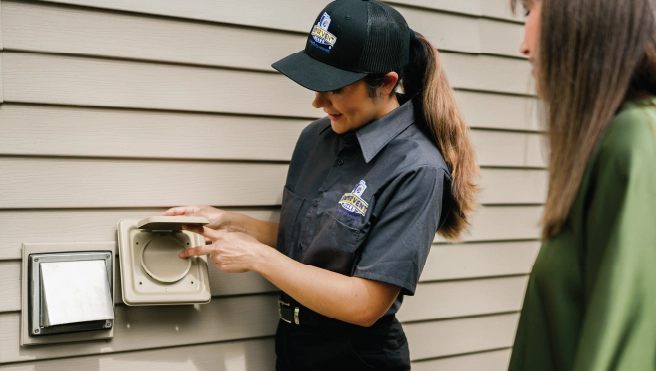
If the dryer must move to improve the layout, rerouting the vent may be needed to maintain a suitable exhaust path. When the new position requires a separate route to the exterior, professional dryer vent installation may be the better correction.
Our Dryer Door Reversal Process
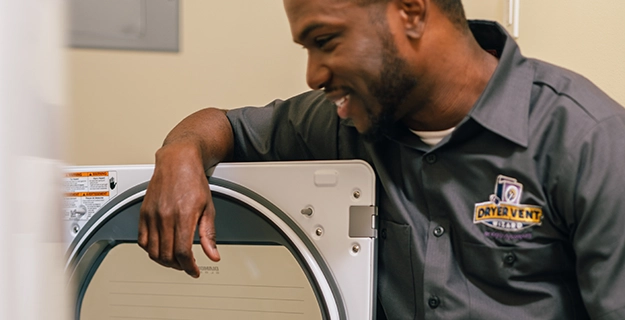
Dryer door reversal changes which way the appliance opens. Before making the adjustment, the technician checks the room layout and dryer connections to confirm the new door direction will work safely.
We follow a careful process to confirm that the change improves access and preserves normal dryer operation:
Laundry Space Check: We inspect the washer position, dryer placement, nearby walls, room doors, and walkways to determine whether a different door swing would improve access.
Vent Connection Check: We evaluate how the appliance sits against the existing connection. If the vent is crushed, disconnected, or damaged, the dryer vent system may also need repair before the appliance is returned to position.
Model Compatibility Review: We confirm that the dryer design and manufacturer configuration support door reversal before removing hardware.
Door Hardware Reconfiguration: We reposition the hinges, handle, screws, latch components, and mounting hardware according to the appliance design.
Placement and Route Review: When the dryer has been relocated, or the existing connection is uncertain, a complete inspection can confirm if the exhaust path still supports the new position.
Alignment and Closure Check: We adjust the door so it sits evenly, closes securely, and engages the latch without gaps or uneven contact.
Operation Test: We open, close, and latch the door several times to confirm that the new swing works with the surrounding layout and does not interfere with normal use.